Work
Internet Society
1551 Emancipation Highway #1506
Fredericksburg, VA. 22401
U.S.A
Explore
-
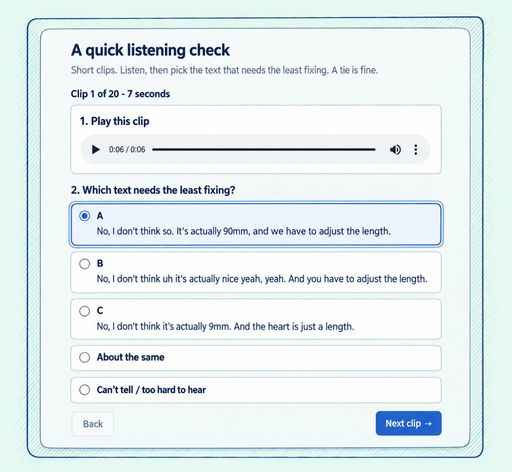 Transcription without the fuss
I wanted a reliable way to turn recordings into text, so I built a local command and compared three speech-recognition models.
ai accessibility transcription macos -
 Eldritch Horror or Cosmic Gardener? The Case of RBH-1
What could send a supermassive black hole hurtling out of its galaxy—and leave a 200,000-light-year trail of young stars behind it? RBH-1 may be just such an object. Hubble and JWST have made a compelling case, though the black hole itself remains elusive.
astronomy astrophysics black-holes gravitational-waves star-formation -
-
 Keeping a 23-Year-Old Website Usable and Accessible
I wanted to bring neglected parts of my website back to life and make them more accessible. With help from Codex, I also built more testing machinery than I wanted to keep.
accessibility web-development ai -
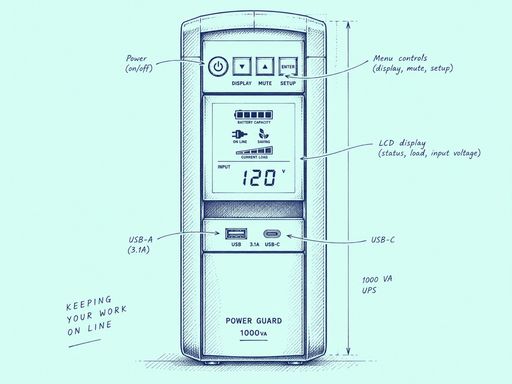 Recovering a Remote Mac Mini
A UPS was the easy part. Getting my remote Mac mini through a longer outage and back to a usable development session took a little more engineering.
macos remote-development ups reliability


Curated Updates
-
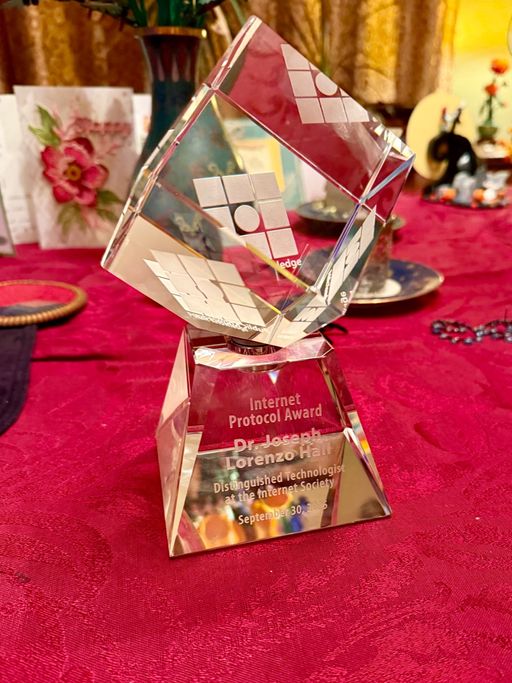 update2025 IP3 Internet Protocol Award
I was honored to receive the 2025 IP3 Internet Protocol Award from Public Knowledge, alongside fellow honorees Dr. Alondra Nelson, Sarah Jeong, Alvaro Bedoya, and Rebecca Kelly Slaughter.
-
-
updateApple Pulls Advanced Data Protection in the UK
I joined the Security, Cryptography, Whatever podcast with Matt Green to discuss Apple's withdrawal of Advanced Data Protection in the UK and what it could mean for end-to-end encryption worldwide.
-
-
-
milestoneDistinguished Technologist, Security Portfolio Lead
Internet Society
Strategic individual contributor at the senior executive level whose work lies at the intersection of computer science, law, and policy. Lead two major strategic portfolios: the Open and Trustworthy Internet program, empowering policymakers and courts with technical expertise to defend Internet openness, and the Online Trust and Safety program, co-creating safety initiatives to protect marginalized and newly connected populations. The broader security portfolio includes managing the Internet Society Amicus Program, driving advocacy at the United Nations, defending end-to-end encryption, and overseeing the Networked and Distributed System Security (NDSS) Symposium. Jointly responsible for leading a diverse, global staff of about 30 subject matter experts, under ISOC's Managing Director.
-
-
-
-
milestoneSenior Vice President, Strong Internet
Internet Society
Senior executive responsible for 5 of 8 ISOC projects. The Strong Internet portofolio includes work that seeks to strengthen the Internet, including time security, routing security, open standards, encryption policy, and Internet infrastructure policy. Responsible for a diverse, global staff of ~40 subject matter experts
